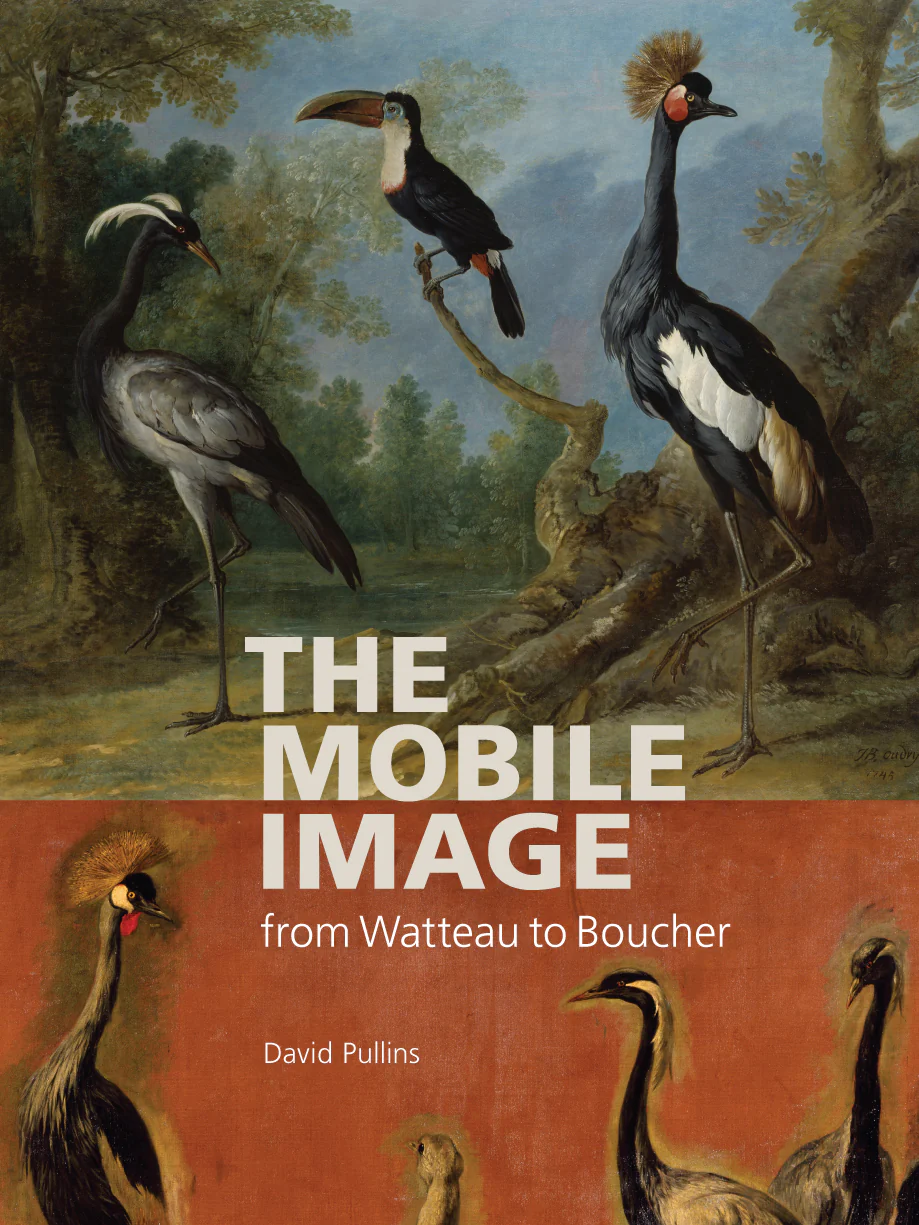
The Mobile Image from Watteau to Boucher
David Pullins
Reframing long-held assumptions about what distinguishes fine from decorative art, this innovative study explores a mode of making, seeing, and thinking that slices across eighteenth-century visual culture.
This book provides a new way of thinking about eighteenth-century French art and visual culture by prioritizing production over reception. Abandoning the ideologically driven discourse that distinguished fine from decorative art between the 1690s and 1770s, The Mobile Image reveals how the two have been inextricably bound from the earliest stages of artistic instruction through the daily life of painters’ workshops. In this study, author David Pullins defines artisanal and artistic means of learning, seeing, and making through a system of “mobile images”: motifs that were effectively engineered for mobility and designed never to be definitive, always awaiting replication and circulation. He examines the careers of Antoine Watteau, Jean-Baptiste Oudry, and François Boucher, situating them against a much broader cast of actors—such as printmakers, publishers, anonymous studio assistants, and architects, among others—to place eighteenth-century painting within a wider context of media and making.
David Pullins is Jayne Wrightsman Curator at the Metropolitan Museum of Art, where he is responsible for seventeenth-and eighteenth-century French, Italian, and Spanish painting.
“Meticulously researched and eminently readable.”
—Roderick Conway Morris, British Art Journal
“In The Mobile Image from Watteau to Boucher, art historian and curator David Pullins masterfully interrogates the status of the image as an object in eighteenth-century French art.”
—Noelle Barr, caa.reviews
“In building his argument, Pullins draws on a huge array of material that he synthesises so lucidly and effectively that he will surely succeed in persuading readers to think differently about 18th-century French art.”
—Emma Barker, The Art Newspaper
“David Pullins’s attractively produced and well-written The Mobile Image: From Watteau to Boucher joins a growing library of books and articles celebrating copying and pilfering practices in early modern art.”
—James Hall, Times Literary Supplement
“With original and compelling insight, David Pullins examines the interplay between the practice of painters and the demands of consumers, introducing readers to a complex world where artistic invention permeates craftsmanship. The Mobile Image is an essential read for anyone seeking to understand the dynamics of the French art system during the reign of Louis XV.”
—Christian Michel, author of The Académie Royale de Peinture et de Sculpture: The Birth of the French School, 1648–1793
“In The Mobile Image, author David Pullins constructs a new approach to art production in eighteenth-century Paris, through close analysis of the oeuvre and workshops of some of the major painters of the Académie Royale—notably Watteau, Oudry, and Boucher. Impressive and ambitious, this book offers a challenging and exciting approach to the French fine and decorative arts in the Rococo period.”
—Colin B. Bailey, Director of the Morgan Library & Museum
“This eloquent study offers a fresh take on the output of Watteau, Oudry, and Boucher to suggest a far greater embeddedness of their work and methods in eighteenth-century material culture than previously assumed. Tracing the routes by which motifs generated in these artists’ studios traveled ceaselessly across the visual field, The Mobile Image challenges the long-standing distinction between fine and decorative arts. David Pullins’s persuasive rereading of early modern art making as a combinatory practice will impact how we view some of the key inventions of the twentieth-century avant-gardes, notably collage and montage.”
—Ewa Lajer-Burcharth, William Dorr Boardman Professor of Fine Arts, Harvard University, and author of The Painter's Touch: Boucher, Chardin, Fragonard
208 pages
7 1/2 x 10 inches
115 color and 30 b/w illustrations
ISBN 978-1-60606-888-5
paperback
Getty Publications
Imprint: Getty Research Institute
2024
David Pullins
Reframing long-held assumptions about what distinguishes fine from decorative art, this innovative study explores a mode of making, seeing, and thinking that slices across eighteenth-century visual culture.
This book provides a new way of thinking about eighteenth-century French art and visual culture by prioritizing production over reception. Abandoning the ideologically driven discourse that distinguished fine from decorative art between the 1690s and 1770s, The Mobile Image reveals how the two have been inextricably bound from the earliest stages of artistic instruction through the daily life of painters’ workshops. In this study, author David Pullins defines artisanal and artistic means of learning, seeing, and making through a system of “mobile images”: motifs that were effectively engineered for mobility and designed never to be definitive, always awaiting replication and circulation. He examines the careers of Antoine Watteau, Jean-Baptiste Oudry, and François Boucher, situating them against a much broader cast of actors—such as printmakers, publishers, anonymous studio assistants, and architects, among others—to place eighteenth-century painting within a wider context of media and making.
David Pullins is Jayne Wrightsman Curator at the Metropolitan Museum of Art, where he is responsible for seventeenth-and eighteenth-century French, Italian, and Spanish painting.
“Meticulously researched and eminently readable.”
—Roderick Conway Morris, British Art Journal
“In The Mobile Image from Watteau to Boucher, art historian and curator David Pullins masterfully interrogates the status of the image as an object in eighteenth-century French art.”
—Noelle Barr, caa.reviews
“In building his argument, Pullins draws on a huge array of material that he synthesises so lucidly and effectively that he will surely succeed in persuading readers to think differently about 18th-century French art.”
—Emma Barker, The Art Newspaper
“David Pullins’s attractively produced and well-written The Mobile Image: From Watteau to Boucher joins a growing library of books and articles celebrating copying and pilfering practices in early modern art.”
—James Hall, Times Literary Supplement
“With original and compelling insight, David Pullins examines the interplay between the practice of painters and the demands of consumers, introducing readers to a complex world where artistic invention permeates craftsmanship. The Mobile Image is an essential read for anyone seeking to understand the dynamics of the French art system during the reign of Louis XV.”
—Christian Michel, author of The Académie Royale de Peinture et de Sculpture: The Birth of the French School, 1648–1793
“In The Mobile Image, author David Pullins constructs a new approach to art production in eighteenth-century Paris, through close analysis of the oeuvre and workshops of some of the major painters of the Académie Royale—notably Watteau, Oudry, and Boucher. Impressive and ambitious, this book offers a challenging and exciting approach to the French fine and decorative arts in the Rococo period.”
—Colin B. Bailey, Director of the Morgan Library & Museum
“This eloquent study offers a fresh take on the output of Watteau, Oudry, and Boucher to suggest a far greater embeddedness of their work and methods in eighteenth-century material culture than previously assumed. Tracing the routes by which motifs generated in these artists’ studios traveled ceaselessly across the visual field, The Mobile Image challenges the long-standing distinction between fine and decorative arts. David Pullins’s persuasive rereading of early modern art making as a combinatory practice will impact how we view some of the key inventions of the twentieth-century avant-gardes, notably collage and montage.”
—Ewa Lajer-Burcharth, William Dorr Boardman Professor of Fine Arts, Harvard University, and author of The Painter's Touch: Boucher, Chardin, Fragonard
208 pages
7 1/2 x 10 inches
115 color and 30 b/w illustrations
ISBN 978-1-60606-888-5
paperback
Getty Publications
Imprint: Getty Research Institute
2024
Original: $60.00
-70%$60.00
$18.00Description
David Pullins
Reframing long-held assumptions about what distinguishes fine from decorative art, this innovative study explores a mode of making, seeing, and thinking that slices across eighteenth-century visual culture.
This book provides a new way of thinking about eighteenth-century French art and visual culture by prioritizing production over reception. Abandoning the ideologically driven discourse that distinguished fine from decorative art between the 1690s and 1770s, The Mobile Image reveals how the two have been inextricably bound from the earliest stages of artistic instruction through the daily life of painters’ workshops. In this study, author David Pullins defines artisanal and artistic means of learning, seeing, and making through a system of “mobile images”: motifs that were effectively engineered for mobility and designed never to be definitive, always awaiting replication and circulation. He examines the careers of Antoine Watteau, Jean-Baptiste Oudry, and François Boucher, situating them against a much broader cast of actors—such as printmakers, publishers, anonymous studio assistants, and architects, among others—to place eighteenth-century painting within a wider context of media and making.
David Pullins is Jayne Wrightsman Curator at the Metropolitan Museum of Art, where he is responsible for seventeenth-and eighteenth-century French, Italian, and Spanish painting.
“Meticulously researched and eminently readable.”
—Roderick Conway Morris, British Art Journal
“In The Mobile Image from Watteau to Boucher, art historian and curator David Pullins masterfully interrogates the status of the image as an object in eighteenth-century French art.”
—Noelle Barr, caa.reviews
“In building his argument, Pullins draws on a huge array of material that he synthesises so lucidly and effectively that he will surely succeed in persuading readers to think differently about 18th-century French art.”
—Emma Barker, The Art Newspaper
“David Pullins’s attractively produced and well-written The Mobile Image: From Watteau to Boucher joins a growing library of books and articles celebrating copying and pilfering practices in early modern art.”
—James Hall, Times Literary Supplement
“With original and compelling insight, David Pullins examines the interplay between the practice of painters and the demands of consumers, introducing readers to a complex world where artistic invention permeates craftsmanship. The Mobile Image is an essential read for anyone seeking to understand the dynamics of the French art system during the reign of Louis XV.”
—Christian Michel, author of The Académie Royale de Peinture et de Sculpture: The Birth of the French School, 1648–1793
“In The Mobile Image, author David Pullins constructs a new approach to art production in eighteenth-century Paris, through close analysis of the oeuvre and workshops of some of the major painters of the Académie Royale—notably Watteau, Oudry, and Boucher. Impressive and ambitious, this book offers a challenging and exciting approach to the French fine and decorative arts in the Rococo period.”
—Colin B. Bailey, Director of the Morgan Library & Museum
“This eloquent study offers a fresh take on the output of Watteau, Oudry, and Boucher to suggest a far greater embeddedness of their work and methods in eighteenth-century material culture than previously assumed. Tracing the routes by which motifs generated in these artists’ studios traveled ceaselessly across the visual field, The Mobile Image challenges the long-standing distinction between fine and decorative arts. David Pullins’s persuasive rereading of early modern art making as a combinatory practice will impact how we view some of the key inventions of the twentieth-century avant-gardes, notably collage and montage.”
—Ewa Lajer-Burcharth, William Dorr Boardman Professor of Fine Arts, Harvard University, and author of The Painter's Touch: Boucher, Chardin, Fragonard
208 pages
7 1/2 x 10 inches
115 color and 30 b/w illustrations
ISBN 978-1-60606-888-5
paperback
Getty Publications
Imprint: Getty Research Institute
2024