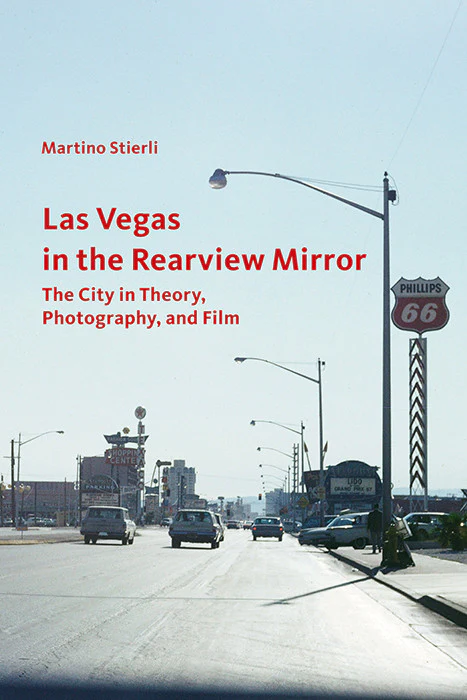
Las Vegas in the Rearview Mirror: The City in Theory, Photography, and Film
Martino Stierli
Learning from Las Vegas, published in 1972 by the architects Robert Venturi, Denise Scott Brown, and Steven Izenour, marks the turn in architectural theory from modern to postmodern. Martino Stierli explores the significance of this controversial publication by situating it in the artistic, architectural, and urbanist discourse of the 1960s and ’70s, and by evaluating the book’s enduring influence on visual studies and architectural research. Stierli provides an original, indepth analysis of the postmodern image of the city and the representation of urban form in visual media, graphics, and typography.
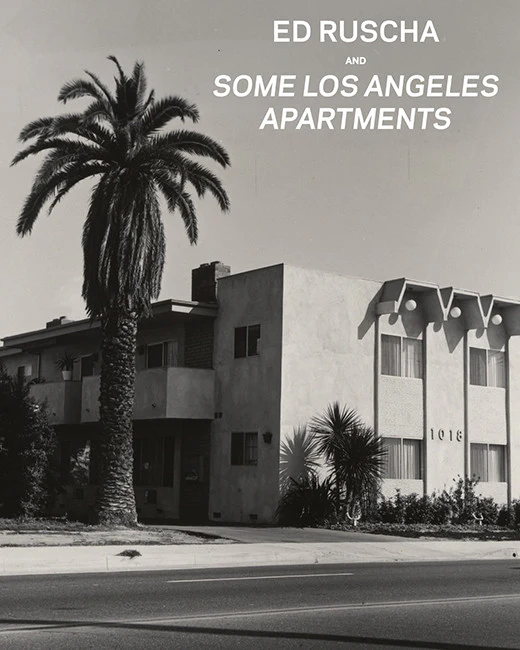
Referencing cinematic visualization, the authors of Learning from Las Vegas documented a sprawling postwar American city from a moving car. Stierli examines this methodology against the background of contemporary pop and conceptual art, including the work of artists Ed Ruscha and Stephen Shore. Using both text and image, Stierli assesses the broad intellectual impact of this architectural manifesto and explains why the lessons from Learning from Las Vegas remain relevant today.
Martino Stierli holds a Swiss National Science Foundation Professorship at the Institute of Art History at the University of Zürich and is a freelance curator. He is widely published and the author of Venturi’s Grand Tour: Zur Genealogie der Postmoderne (Standpunkte Basel, 2011).
“Martino Stierli . . . here provides a meticulous assessment of the context in which Learning from Las Vegas was written. His new book is rich with insights about Venturi and Scott Brown, underscoring the latter’s essential role in the study. But Stierli’s most important contribution is providing a fresh examination of planning, design, and critical thinking about the built environment in the US and Europe during the third quarter of the 20th century.”
—Choice
“Martino Stierli examines Learning from Las Vegas as an urbanist analysis, within the artistic and architectural context of 1960s–70s pop culture, high and low art, and urban forms.”
—Book News
352 pages
6 1/2 x 10 inches
136 color and 88 b/w illustrations
ISBN 978-1-60606-137-4
paperback
Getty Publications
Imprint: Getty Research Institute
2013
Martino Stierli
Learning from Las Vegas, published in 1972 by the architects Robert Venturi, Denise Scott Brown, and Steven Izenour, marks the turn in architectural theory from modern to postmodern. Martino Stierli explores the significance of this controversial publication by situating it in the artistic, architectural, and urbanist discourse of the 1960s and ’70s, and by evaluating the book’s enduring influence on visual studies and architectural research. Stierli provides an original, indepth analysis of the postmodern image of the city and the representation of urban form in visual media, graphics, and typography.
Referencing cinematic visualization, the authors of Learning from Las Vegas documented a sprawling postwar American city from a moving car. Stierli examines this methodology against the background of contemporary pop and conceptual art, including the work of artists Ed Ruscha and Stephen Shore. Using both text and image, Stierli assesses the broad intellectual impact of this architectural manifesto and explains why the lessons from Learning from Las Vegas remain relevant today.
Martino Stierli holds a Swiss National Science Foundation Professorship at the Institute of Art History at the University of Zürich and is a freelance curator. He is widely published and the author of Venturi’s Grand Tour: Zur Genealogie der Postmoderne (Standpunkte Basel, 2011).
“Martino Stierli . . . here provides a meticulous assessment of the context in which Learning from Las Vegas was written. His new book is rich with insights about Venturi and Scott Brown, underscoring the latter’s essential role in the study. But Stierli’s most important contribution is providing a fresh examination of planning, design, and critical thinking about the built environment in the US and Europe during the third quarter of the 20th century.”
—Choice
“Martino Stierli examines Learning from Las Vegas as an urbanist analysis, within the artistic and architectural context of 1960s–70s pop culture, high and low art, and urban forms.”
—Book News
352 pages
6 1/2 x 10 inches
136 color and 88 b/w illustrations
ISBN 978-1-60606-137-4
paperback
Getty Publications
Imprint: Getty Research Institute
2013
Original: $50.00
-70%$50.00
$15.00Description
Martino Stierli
Learning from Las Vegas, published in 1972 by the architects Robert Venturi, Denise Scott Brown, and Steven Izenour, marks the turn in architectural theory from modern to postmodern. Martino Stierli explores the significance of this controversial publication by situating it in the artistic, architectural, and urbanist discourse of the 1960s and ’70s, and by evaluating the book’s enduring influence on visual studies and architectural research. Stierli provides an original, indepth analysis of the postmodern image of the city and the representation of urban form in visual media, graphics, and typography.
Referencing cinematic visualization, the authors of Learning from Las Vegas documented a sprawling postwar American city from a moving car. Stierli examines this methodology against the background of contemporary pop and conceptual art, including the work of artists Ed Ruscha and Stephen Shore. Using both text and image, Stierli assesses the broad intellectual impact of this architectural manifesto and explains why the lessons from Learning from Las Vegas remain relevant today.
Martino Stierli holds a Swiss National Science Foundation Professorship at the Institute of Art History at the University of Zürich and is a freelance curator. He is widely published and the author of Venturi’s Grand Tour: Zur Genealogie der Postmoderne (Standpunkte Basel, 2011).
“Martino Stierli . . . here provides a meticulous assessment of the context in which Learning from Las Vegas was written. His new book is rich with insights about Venturi and Scott Brown, underscoring the latter’s essential role in the study. But Stierli’s most important contribution is providing a fresh examination of planning, design, and critical thinking about the built environment in the US and Europe during the third quarter of the 20th century.”
—Choice
“Martino Stierli examines Learning from Las Vegas as an urbanist analysis, within the artistic and architectural context of 1960s–70s pop culture, high and low art, and urban forms.”
—Book News
352 pages
6 1/2 x 10 inches
136 color and 88 b/w illustrations
ISBN 978-1-60606-137-4
paperback
Getty Publications
Imprint: Getty Research Institute
2013